Why I Finally Ditched the Supermarket First Aid Kit
(And What I Bought Instead)
Affiliate Disclosure: Hey Reader! This post contains affiliate links. When you buy through our links, Pack & Pitch may earn a small commission, at no extra cost to you. Learn more here
As an Amazon Associate, we earn from qualifying purchases.
TL;DR: The Best First Aid Kit for Your Needs.
If you are upgrading your gear for this season, stop buying the $20 plastic boxes from the supermarket. They will fail you when you are stressed.
For the Hiker: Get the Snake Bite Kit. The “Square” tension indicator is a lifesaver.
For the 4WD/Ute: The Vehicle Kit ensures you never leave home without safety gear.
For the Family: The Family First Aid Kit is the gold standard for organization.
Stay safe out there.
Don’t be a statistic.
That sounds dramatic, I know. But if you’ve ever tried to find a pair of tweezers in a $20 supermarket first aid kit while your 6-year-old screams about a splinter, you know that panic is the enemy.
Most of us treat first aid kits as a “tick box” item. We chuck a generic white box in the ute and forget about it. Then, when something actually goes wrong, a burn from the camp stove or a snake bite, we open the kit and it’s just… confetti. Bandages unravelling, scissors that don’t cut, and zero instructions.
I recently picked up the Survival Family First Aid Kit for our own trips, and honestly, the design is a revelation. I’ve since dug into their backstory and found out they’re finally available on Amazon Australia, which makes grabbing them a whole lot easier.
Quick Comparison: Which One Do You Need?
If you are short on time, here is the breakdown of the three kits I looked at.
| Kit Name | Best For | The “Dad Feature” I Love |
| Snake Bite Kit | Bushwalking & Hiking | The Smart Bandage. It shows you exactly how tight to pull it (Rectangles turn to Squares). No guesswork. |
| Vehicle Kit | The Car Boot (4WD/Road Trips) | Reflective & Trauma Ready. You can find it in the dark, and it separates “Bleeding” from “Boo-boos.” |
| Family Kit | Home & Campsite | Numbered Mesh Pockets. Tells you where everything is and, crucially, shows you clearly when you’ve run out of something. |
The Backstory: Education First, Gear Second
Survival isn’t just a faceless drop-shipping brand. It was founded in Australia back in 1988 by twin brothers Jerry and Tim Tyrrell after a personal family tragedy. They didn’t start by selling bandages; they started by writing the First Aid Emergency Handbook, which won an Australian Design Award.
That DNA is obvious in these kits. They aren’t just bags of supplies; they are information systems. Every pocket is labelled. The kit literally tells you what to do and in an emergency situation thats EXACTLY what you need!
The “Must-Have” for Hikers: Snake Bite First Aid Kit
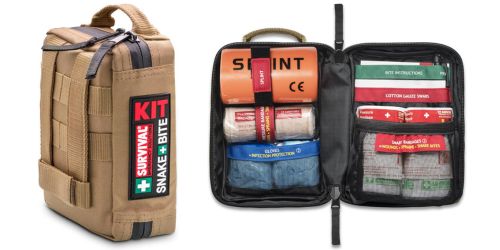
We all know the drill with snake bites: Pressure Immobilisation Technique. You need to wrap the limb tight enough to stop venom spread, but not so tight you cut off blood flow. In the heat of the moment with adrenaline pumping, almost everyone gets this wrong.
This kit solves the panic factor. It includes the Smart Bandage, which has pictograms printed right on the fabric. You simply pull the bandage until the rectangles turn into squares.
That’s it. If the rectangles look like squares, you have achieved the correct tension. You don’t need to be a paramedic; you just need to look at the shape.
Grab one for your hiking pack here
The “Road Trip” Essential: Vehicle First Aid Kit
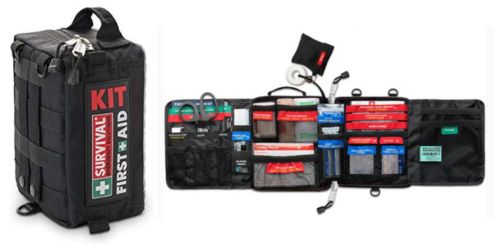
I used to just chuck the home kit in the boot for trips. Then I’d forget to put it back. Or worse, I’d need a simple bandaid at a rest stop, rummage through the bag, and leave it a mess.
A dedicated kit that lives in the car. The Vehicle Kit is designed for the reality of roadside incidents. It’s made of heavy-duty material with reflective piping so you can actually find it if you’re digging around the boot at night.
What I really like is the separation of “major” and “minor” issues. The CPR kit is separate for instant access, and the serious trauma gear isn’t mixed in with the splinter probes.
See the current price on Amazon
The “Base Camp” Hub: Family First Aid Kit
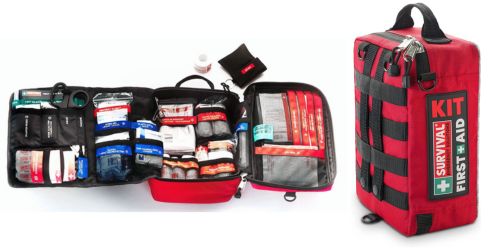
Most family kits are a black hole. You open them up and it’s an explosion of half-used crepe bandages and empty wrappers. You never know what you’re missing until you really need it.
We keep this one in the kitchen and take it camping as our “Base Camp” hub. The genius here is the Labelled & Numbered System.
Every pocket has a number and a label. “01 – Bandages”, “02 – Dressings”. It forces you to put things back where they belong. It sounds simple, but it stops the kit from becoming a junk drawer.
The Personal Touch:
There is a dedicated zippered mesh pocket left empty for your specific needs. We use it for the kids’ Panadol, hayfever tablets, and asthma puffers. It turns a generic medical bag into a custom health station for your family.
Upgrade your family safety gear here
More Safety & Preparation
A first aid kit is just one part of camping safely:
- Bug Protection: Insect Repellent Guide – Prevent bites before treating them
- Know The Rules: National Park Fees Guide – Emergency contacts included
- Set Up Smart: Campsite Layout Guide – Safe positioning
- Be Prepared: Ultimate Camping Checklist – Don’t forget anything
Find campsites with ranger stations nearby: → Browse Directory
Dad’s Final Advice
You buy insurance for your car and your house. Treat these kits as insurance for your family. The difference is, this insurance costs less than a tank of fuel and might actually save a life.
Don’t wait until you’re halfway to the campsite to realise you forgot the bandaids.
Latest Posts
- Camping With an EV or Hybrid in Australia 2026: Can You Run a 12V Fridge?
 EVs and hybrids have no alternator, so a dual-battery setup is out. Here is how V2L actually works for camping, which AU models have it, and what a fridge costs you in range.
 - Best Camping Headlamps: From Serious Gear to Panda Faces (2026)A dead headlamp at 11pm ruins the whole trip. We’ve filtered Amazon AU down to 6 headlamps that actually hold up in Australian conditions — including the one that already converted a real sale.
- Winter Camping Australia 2026: The Sleep System & Layering GuideAU winter camping done properly. The sleep system that keeps you warm at -5C, the layers that beat cotton-kills hypothermia, the AU regions and what gear they actually need. Driveway-tested, ProductReview-cross-checked.
- First Time Camping in Australia? Don’t Make These Mistakes (2026 Guide)Most first camping trips fail on systems, not gear. Generator rules, grey water, the driveway test, and what to actually pack. The honest beginner’s guide for Australian conditions.
- How to Power a CPAP Machine While Camping in Australia (2026 Guide)Running a CPAP off-grid doesn’t need an expensive inverter setup. The right 12V cable, the right settings, and a 500Wh station will cover most people for 3–5 nights. Here’s exactly what to buy and how to set it up.