
Solo Camping Australia:
The Ultimate “No-Fail” Safety & Gear Manifesto
Affiliate Disclosure: Hey Reader! This post contains affiliate links. When you buy through our links, Pack & Pitch may earn a small commission, at no extra cost to you. Learn more here
As an Amazon Associate, we earn from qualifying purchases.
Let’s skip the fluff: Solo camping in the Australian bush isn’t a “soul-searching” montage, it’s a high-stakes logistics exercise. When you’re three hours from the nearest bitumen and you’ve got no one to spot you while you’re reversing or to hand you a bandage, your margin for error is zero.
TL;DR: The Solo Camper’s Sitrep
If you only have 30 seconds before the kids find you, here is the “Don’t Die” list:
The Location: For your first solo run, pick a managed campground (like Glenworth Valley or Cattai) to test your systems before hitting the State Forests.
The Golden Rule: If you haven’t logged a Trip Intention Form with a trusted contact, you aren’t ready to leave.
The Essential Tech: A 406MHz PLB is mandatory; a mobile phone is a luxury.
The First Aid Shift: Swap the “family” kit for one focused on Snake Bites (PIT bandages) and Major Trauma.
The Setup: Use a 180° Awning or a Swag. If you can’t pitch it solo in under 5 minutes, it’s the wrong gear.
Don’t skip the admin. Solo camping isn’t about being “off the grid”, it’s about being findable if the grid fails. Below is the exact format I use to keep the family from panicking. It takes two minutes to fill out but could save a $20,000 SAR mission later.
The “Pack and Pitch” Solo Trip Intention Plan
Instructions: Copy and paste the text below into a Message or Email to your Emergency Contact before you lose reception.
1. THE MISSION
Driver Name: [Your Name]
Vehicle: [Make/Model] | Rego: [Number] | Color: [Color]
UHF Channel: [e.g., CH 18 or CH 5 for Emergency]
2. THE ROUTE
Destination: [Campsite Name/GPS Coordinates]
Entry Point: [e.g., Putty Rd entrance to Wollemi]
Planned Stops: [e.g., Fuel at Bilpin]
3. THE TIMELINE
Departure: [Date/Time]
Planned Return: [Date/Time]
The “PANIC” Time: If you haven’t heard from me by [Date + 4 Hours], please contact the local Police or National Parks office.
4. THE GEAR
PLB/Satellite Messenger: [Yes/No]
Water Supply: [e.g., 20 Litres]
First Aid: [e.g., Snake Bite Kit Included]
Download the Printable Solo Trip Intention PDF Here
In the Aussie bush, gear failure isn’t just an inconvenience, it’s a liability. When you’re with a group, you can borrow a mate’s jump-starter or share a first aid kit. When you’re solo, you are the redundancy.
We prioritise three things – Comms, Medical, and Recovery. If your gear doesn’t help you stay in touch, stay alive, or stay mobile, it’s just dead weight. Let’s start with the one thing that replaces a physical companion, your link to the outside world.
1. The Communications Hierarchy: PLB vs. Satellite Messenger
An authority-level solo kit doesn’t rely on “bars” of service. Instead, you need to understand the Two-Tier Comms Strategy:
The “Life-Saver” (PLB)

A 406 MHz Personal Locator Beacon (PLB) is a non-negotiable!
The Tech: It transmits a signal directly to the Cospas-Sarsat satellite system, which alerts AMSA (Australian Maritime Safety Authority in Canberra.
- The Pro Move: Ensure yours has GPS encoding. Without GPS, your search area is 20km; with it, it’s 100m.
- Recommendation: RescueME PLB1. No subscription, 7-10 year battery life.
The “Check-In” (Satellite Messenger)
Devices like the Garmin inReach are for convenience and logistics.
- The Benefit: You can text the wife “I’m okay” or “Running a day late.”
- The Risk: They require a paid subscription. If your credit card expires while you’re in the scrub, your SOS button is a paperweight. Never rely on a subscription device as your only SOS.
2. The “Solo Survival” First Aid Protocol
Forget the Band-Aids. A solo camper’s kit is about managing Life-Threatening Bleeding and Envenomation.
The Pressure Immobilisation Technique (PIT)
In Australia, we don’t use tourniquets for snakes; we use PIT. If you are solo, you must be able to apply this one-handed.
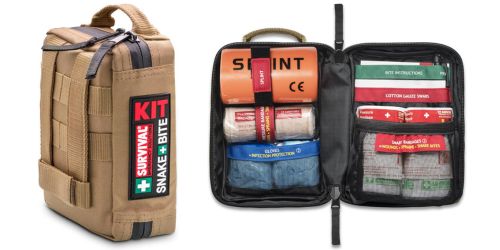
- The Gear: You need at least three 10cm wide Heavy Crepe Bandages.
- The Action: Start at the bite site, wrap down to the fingers/toes, then back up the entire limb.
- Authority Tip: Buy the SMART Bandages (like from SURVIVAL) which have icons that turn into squares when the correct tension is reached.
3. Solo Logistics: The “10-Minute Pitch” Rule
When you’re alone, weight is secondary to ease of assembly. If it takes two people to slide a fiberglass pole through a sleeve, it’s garbage for a solo trip.
| Gear Category | The “Pack and Pitch” Standard | Why It Wins for Solo |
| Shelter | 3-Pole Dome or Swag | You can pitch a 23Zero or Darche Swag in 120 seconds. If the wind picks up, you aren’t fighting a sail. |
| Power | Fixed 12V Lithium (LiFePO4) | Ditch the loose solar blankets. A fixed DCDC charger setup ensures your fridge and comms stay alive without you “managing” the sun all day. |
| Recovery | X-BULL or MAXTRAX Boards | You have no one to push. If you’re bogged in sand, recovery boards are your only “second person.” |
4. Solo Risk Assessment: What Goes Wrong and What Saves You
| What Goes Wrong | Before You Leave | If It Happens Solo |
| Vehicle Failure | Pre-trip inspection of belts, hoses, coolant. Fit an external UHF antenna. | 5W UHF Radio on Channel 5 or 35 (emergency repeater channels). Stay with the vehicle. |
| Heat Exhaustion | 7L of water per Carry minimum 7L water per person per day, plus electrolytes (Hydralyte). | Find shade, soak a shirt in water, activate PLB if mental confusion starts. |
| Getting Lost | Load offline maps (Hema Explorer or Avenza). Carry paper backup. | Stop moving. Stay with the vehicle. A helicopter can spot a car much faster than a person. |
5. Regulatory Mastery: Where You Can Actually Sleep
Authority is knowing the difference between Tenures.
- National Parks (NPWS): Highest protection. Check the Alert Page for your specific park before leaving. Firewood collection is strictly illegal.
- State Forests: The “Wild West.” Generally free, dog-friendly, and you can collect fallen wood. Great for solo privacy, but zero ranger presence.
FAQ: Solo Camping in Australia: Common Questions
The “Dad Advice” Closing Note
Look, the dream of sitting by a fire with a tin of beans and zero noise is a good one. But don’t let the silence make you complacent. Australia is a big, empty place that doesn’t care about your “me time.” Pack the right kit, tell your wife exactly where you’re going, and for God’s sake, don’t forget the Ledlenser, tripping over a tent peg at midnight is a pathetic way to end a trip.
Gear Up for Your Solo Trip
Going solo means getting your kit dialled in before you leave the driveway:
- Shelter: Best Family Tents for Australia or go full swag mode
- Keep Food Cold: Best Camping Fridges
- Power Off-Grid: Portable Power Stations
- Medical Backup: Survival First Aid Kit Review
- Bug Defence: Best Insect Repellent Guide
- The Full List: Ultimate Camping Checklist for AU & NZ
Planning your first solo trip? → Browse campsites in our directory
Latest Posts
- Best Camping Headlamps: From Serious Gear to Panda Faces (2026)
 A dead headlamp at 11pm ruins the whole trip. We’ve filtered Amazon AU down to 6 headlamps that actually hold up in Australian conditions — including the one that already converted a real sale.
 - Winter Camping Australia 2026: The Sleep System & Layering Guide
AU winter camping done properly. The sleep system that keeps you warm at -5C, the layers that beat cotton-kills hypothermia, the AU regions and what gear they actually need. Driveway-tested, ProductReview-cross-checked.
- First Time Camping in Australia? Don’t Make These Mistakes (2026 Guide)Most first camping trips fail on systems, not gear. Generator rules, grey water, the driveway test, and what to actually pack. The honest beginner’s guide for Australian conditions.
- How to Power a CPAP Machine While Camping in Australia (2026 Guide)
Running a CPAP off-grid doesn’t need an expensive inverter setup. The right 12V cable, the right settings, and a 500Wh station will cover most people for 3–5 nights. Here’s exactly what to buy and how to set it up.
- Jackery vs EcoFlow Australia 2026: Which Power Station Is Actually Worth Your Money?
Jackery or EcoFlow? Two of the biggest names in portable power, and they take completely different approaches. One charges faster than you can pack the car. The other won’t wake the kids at 2am. Here’s the honest 2026 breakdown for Aussie families who don’t want to waste $3,000.