
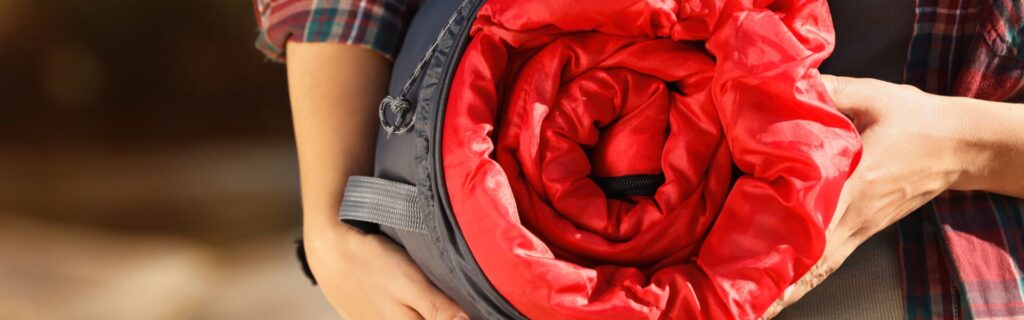
Ultimate Sleeping Bag Guide
Down vs. Synthetic for Aussie & Kiwi Campers
Affiliate Disclosure: Hey Reader! This post contains affiliate links. When you buy through our links, Pack & Pitch may earn a small commission, at no extra cost to you. Learn more here
As an Amazon Associate, we earn from qualifying purchases.
TL;DR: The 30-Second Summary
Don’t have time for the full tour? Here is the cheat sheet for the Best Family Sleeping Bags Australia currently has to offer:
For Car Camping: Buy a Canvas/Cotton bag (Synthetic). It’s heavy but sleeps like a real bed.
For Hiking: Buy Down. It’s lighter and warmer, but keep it dry.
For NZ/Wet Weather: Buy Synthetic. Down fails when wet; synthetic keeps working.
The Golden Rule: Ignore the “Extreme” rating. Only trust the “Comfort” rating.
🏆 Our “Add to Cart” Recommendations:
Best Overall Comfort: Colman Pilbara C-5 – Cotton lining (no sweaty plastic feel), huge size, tough canvas shell.
Best Budget / Kids: Coleman Mudgee Tall – Cheap, durable, and warm enough for most school holiday trips.
Best “Crossover” (Hike/Car): Naturehike CW400 – Real down, packs tiny, good if you plan to ditch the car and walk a bit.
There you are, staring at a wall of nylon sausages at your local camping store. Some are tiny, some are the size of a beer keg. Some claim they will keep you alive on Everest, while others look like they wouldn’t survive a sleepover in the lounge room.
And the price tags? They make no sense. Why is that thin one $500, while that thick fluffy one is $80?
If you pick the wrong one, you aren’t just wasting money, you’re signing up for a miserable, shivering night staring at the tent roof waiting for the sun to rise, or worse, slow cooking yourself.
Let’s cut through the marketing noise. Imagine I’m standing there with you. We’re going to pull these bags off the shelf, look at the tags, and figure out exactly what you need for Australian and NZ conditions.
OK, Lets do this!
Step 1 – Pick Your Fill (The “Puffer” vs. The “Quilt”)
Grab two bags off the shelf. In your left hand, grab a hiking bag labeled “Down.” In your right hand, grab one labeled “Synthetic.” Feel the difference?
The Down Option (Left Hand)
The bag in your left hand feels incredibly light. If you squeeze it, it almost disappears, then slowly puffs back up. That’s Down (usually duck or goose feathers). Nature is still the best engineer, down clusters trap warm air more efficiently than any man-made fiber.
- The “Loft” Number: You’ll see numbers like 600, 750, or 800+ on the tag. This is the “fluffiness quality.” Higher numbers mean better warmth-for-weight.
- Why you buy it: You are hiking, or your car boot is tiny. You need maximum warmth that packs down to the size of a loaf of bread.
- The Catch: Down hates water. If you get this bag wet, those feathers clump together like a wet dog, and you lose all your insulation. It also takes forever to dry.
The Synthetic Option (Right Hand)
The bag in your right hand feels substantial. It’s heavier. When you squeeze it, it feels like a dense doona. This is Synthetic (polyester fibers).
- Why you buy it: You are car camping in Australia or New Zealand. You have kids who might spill Milo on it. Synthetic insulation keeps working even if it gets damp, and it dries out fast.
- The Bonus: It is usually half the price of down.
- The Verdict: If you are carrying it on your back for 20km, buy Down. If it’s going in the back of the Hilux for a weekend at the holiday park, buy Synthetic.
Step 2: Reading the Tag (Spot the Lie)
Now, look at the temperature rating on the bag. This is where most people get scammed. You will usually see three numbers listed, but brands often print the scary one in big bold letters.
Let’s say the big print says “-10°C EXTREME.” That sounds impressive, right? You might think, “Great, I’ll be toasty warm even if it freezes.” Wrong.
Here is how to translate the marketing speak (based on the EN/ISO testing standards):
- Extreme Rating (-10°C): This is the Survival rating. It means a standard adult woman can survive for six hours without dying of hypothermia. You will not be sleeping; you will be shivering violently and praying for the sun. Ignore this number.
- Lower Limit (-2°C): This is the rating for a standard “warm sleeper” (biologically, usually men) to sleep in a curled-up position without waking up from the cold.
- Comfort Rating (+3°C): This is the rating for a “cold sleeper” (biologically, usually women) to sleep in a relaxed position. This is the only number you should trust.
Dad’s Rule of Thumb: Always buy a bag rated 5°C colder than the lowest temperature you expect. If you are camping in the Blue Mountains and the forecast says 5°C, bring a 0°C bag. You can always unzip a warm bag to cool down; you can’t make a cold bag warmer.
Step 3: Anatomy of a Bag (The Hidden Features)
It’s not just about the fill. A cheap bag cuts corners on the construction. Here is what to check before you buy:
1. The Draft Tube
Unzip the bag a little. Is there a sausage of fabric running along the inside of the zipper? That is a draft tube.
- Why you need it: Without it, the wind blows right through the zipper teeth. A bag without a draft tube is useless in winter.
2. The “Anti-Snag” Zipper
Zip it up and down fast. Does it catch the fabric?
- The Test: Good bags have a stiff piece of webbing or hard plastic guard along the zipper track to stop the fabric from getting chewed up. There is nothing worse than being stuck inside your sleeping bag at 2 AM dying for a pee because the zipper ate the lining.
3. The Hood
Does it have a hood?
- Why you need it: You lose a huge amount of heat through your head. A “Mummy” bag hood cinches down tight around your face. Rectangular bags often don’t have hoods—if you buy one of those, bring a beanie.
Step 4: The Shape (Mummy vs. Human)
The Mummy Bag
Most hiking bags look like sarcophagi, wide at the shoulders, tight at the feet.
- The Logic: Your body heat has less “dead air” to warm up, making it very efficient.
- The Reality: If you sleep on your back like a soldier, it’s great. If you toss, turn, or like to stick a leg out, it’s a straitjacket.
The Rectangular Bag
This is the classic “sleepover” bag. It’s a big square.
- The Reality: It feels like a normal bed. You have room to move. The downside? All that empty space around your feet is cold air your body has to heat up.
The “Aussie Swag” Bag (The Hybrid)
This is a unique category popular here (like the Coleman Pilbara). These are massive canvas bags (usually 100cm wide).
- The Experience: They are lined with cotton flannel, not slippery nylon. They feel like real sheets. They are heavy and useless for hiking, but for a night in the swag or tent? They are absolute luxury.
Step 5: The System (What’s Underneath?)
Stop. Before we head to the checkout, look down. What are you putting this bag on?
If you put a $600 down sleeping bag directly on the ground (or a cheap uninsulated air mattress), you will freeze. The cold ground sucks heat away from your body 50x faster than air. Your sleeping bag insulation gets crushed underneath you, rendering it useless.
You need a sleeping mat with an R-Value.
What the heck is R-Value? (And why it matters)
If there is one technical number you actually need to pay attention to, it’s R-Value.
Most people obsess over their sleeping bag temperature rating but completely ignore their mattress. This is a rookie mistake.
Here is the science (simplified): The ground is a massive heat sink. It is colder than you are, and it wants to steal your body heat. In fact, the cold ground will suck heat out of your body roughly 50 times faster than cold air will.
If you put a $600 down sleeping bag on a yoga mat (or a cheap air mattress), your body weight crushes the insulation underneath you. You effectively have zero insulation between you and the freezing dirt. You will be cold, no matter how good your sleeping bag is.
“R” stands for Resistance. It measures how well the mat resists that heat flow.+1
- Higher Number = Warmer Bum.
The Aussie R-Value Cheat Sheet
(Based on the new ASTM F3340-18 Standard)
| R-Value | Best For | Typical Product |
| 0.5 – 1.5 | Summer Only | Yoga mats, cheap foam rolls, Kmart air beds. |
| 2.0 – 3.5 | 3-Season (Spring/Autumn) | Most self-inflating mats. Good for 90% of family camping. |
| 4.0 – 5.5 | Winter / Cold Sleepers | Insulated air mats. Necessary if temps drop near 0°C. |
| 6.0+ | Alpine / Snow | Serious expeditions. |
Dad Hack: R-Values are additive. If you only have a summer mat (R1) but want to go camping in winter, you don’t have to buy a new $300 mat. Just buy a cheap closed-cell foam mat (R2) and put it underneath your inflatable mat.
R1 + R2 = R3. Now you’re warm.
Step 6: The Dad Recommendations (What to Buy)
Okay, we’ve walked the aisle. Here is what I would tell you to buy based on what is actually available (and worth the money) on Amazon Australia right now. These are in my opinion the Best Family Sleeping Bags Australia currently has to offer.
1. The “I Just Want to Sleep Like a Log” Choice
We are grabbing: The Coleman Pilbara C-5
This is the king of car camping. It’s huge, it’s cotton-lined, and it fits perfectly in a double swag or on a stretcher.
- The Feel: It doesn’t have that “sweaty plastic” feel. The lining is flannel, just like your sheets at home.
- The Specs: Rated to -5°C, meaning it handles chilly Autumn nights with ease. It is machine washable (crucial for families).
- The Trade-off: It is massive. Do not try to hike with this. This is for when the car is parked 10 meters away.
2. The “Budget Friendly / Kids” Choice
We are grabbing: The Coleman Mudgee Tall
If you are buying for the whole family, you don’t want to spend $200 per person. The Mudgee is the perfect workhorse. It ditches the heavy canvas for lighter polyester but keeps the “Comfort Cuff” so you aren’t scratching your face on zippers.
- The Specs: It’s a “Tall” bag, fitting people up to 1.9m. This is great for kids because they won’t outgrow it in a year.
- Warmth: It’s a solid 3-season bag. Good for Easter camping, but bring an extra blanket if you’re heading out in deep winter.
3. The “I Might Hike (But I’m Not Rich)” Choice
We are grabbing: Naturehike CW400 Down Series
Naturehike has disrupted the market. They offer genuine Goose Down bags for a fraction of the price of the big outdoor brands.
- The Specs: It weighs roughly 900g (compared to 3kg+ for the Pilbara). It packs down to the size of a football.
- The Performance: It uses 750+ fill power down, which is incredibly warm for the weight.
- The Trade-off: It is a tighter “mummy” fit. And because the shell is lightweight nylon, you need to be gentle with the zipper.
Step 7: Care & Maintenance (Make It Last)
One last thing before you load up the car. How you treat your bag determines if it lasts 2 years or 10.
- Don’t Roll It, Stuff It: It sounds wrong, but stuffing your sleeping bag into the sack randomly is better than folding or rolling it. Folding creates creases in the same spot every time, breaking the insulation.
- Storage at Home: When you get home, do not leave your sleeping bag compressed in its small sack. It crushes the fibers permanently. Store it loose in the big mesh bag it comes with, or hang it in the wardrobe.
- Washing: Only wash it when it starts to smell or loses its loft. Use a front-loader (top loaders can rip bags) and specific tech-wash soap, not standard detergent which strips the oils from down feathers.
Complete Your Sleep System
A sleeping bag works best with the right setup:
- The Shelter: Best Family Tents – Insulation starts with your tent
- Morning Warmth: Best Coffee Makers – Wake up right
- Power for Electric Blankets: Portable Power Stations – Yes, some people do this
- Campsite Setup: 7-Zone Campsite Guide – Position your tent for warmth
- Full Gear List: Ultimate Camping Checklist – Pillows, mats, and more
Find sheltered campsites: → Browse Directory
Ready to Pack?
Check the current prices on Amazon using the links above. Prices fluctuate, especially before school holidays, so it’s worth grabbing them when you see stock available.
Latest Posts
- Solo Camping Australia: The Ultimate “No-Fail” Safety & Gear Manifesto
 Let’s skip the fluff: Solo camping in the Australian bush isn’t a “soul-searching” montage, it’s a high-stakes logistics exercise. When you’re three hours from the nearest bitumen and you’ve got no one to spot you while you’re reversing or to hand you a bandage, your margin for error is zero. Don’t skip the admin. Solo…
 - Best Camping in NSW 13 Campgrounds Worth the Drive (2026)
 New South Wales has more than 800 campgrounds scattered between the Snowy Mountains and the Queensland border. Choosing the right one usually involves opening 50 tabs of NPWS pages and trying to decipher conflicting Google reviews. I’ve done the legwork (and the driving) to narrow it down. These 13 campgrounds are the ones I keep…
 - How to Keep a Tent Cool: A Dad’s Guide to Surviving the Australian Summer
 There is a specific kind of misery reserved for Australian campers in January. It happens at exactly 6:43 AM. The sun hits the polyester wall of your tent, and within four minutes, your shelter transforms from a cosy bedroom into a microwave. You wake up sweating, sticky, and gasping for air, while the kids are…
 - Best Camp Chairs Australia (2026) The “No-Slouch” Gear Review
 A bad camp chair is a slow-motion disaster for your back. We’ve all been there. You spend $20 on a generic chair from the servo, and by day two, you’re sitting at a 45-degree angle with your knees around your ears. After a long day of wrangling kids or hiking the trails, the last thing…
 - Camping with Kids in Australia: The Complete Family Guide (2026)
 Everything you need to know about camping with kids in Australia. Gear picks, safety tips, meal ideas, and the best family-friendly campgrounds by state.