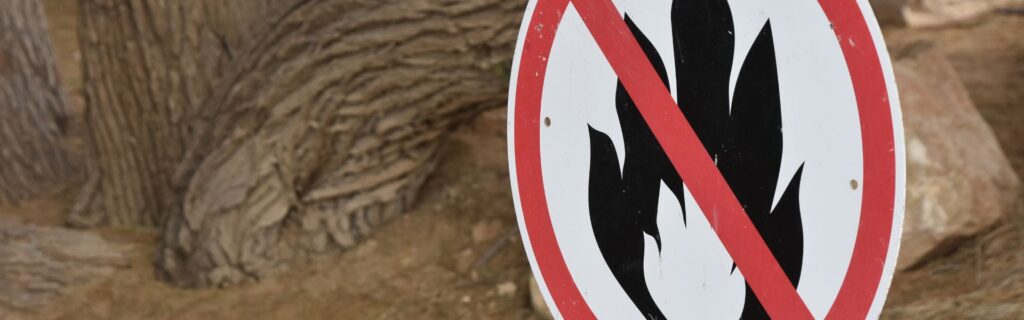
The “Red Zone” Guide
Fire Bans, River Crossings & When to Turn Back (2026)
Transparency Note: Pack and Pitch is reader-supported. While this guide is purely informational, our site contains affiliate links to gear we love. If you click one and make a purchase, we may earn a small commission at no extra cost to you. This keeps the lights on and the campfire burning.
TL;DR: The “Stay Alive” Cheat Sheet
If you ignore everything else on this website, read this. These five rules will keep you out of the news.
The Fire Rule (AU): A “Total Fire Ban” means NO solid fuel (wood, charcoal, heat beads). Gas stoves are usually okay if you clear the ground, but check the specific state app first.
The River Rule (NZ): If the water is moving faster than a walking pace or is higher than your knees, do not cross.
The “Trip Wire”: Set a cancellation rule before you leave (e.g., “If the rating is Catastrophic, we stay home”). Stick to it.
The Trap: Do not confuse “Fire Danger Ratings” (the dial on the roadside) with “Total Fire Bans” (the legal restriction). They are different things.
The Mantra: The bush doesn’t care about your schedule. If in doubt, turn around.
The Golden Rule: “If In Doubt, Don’t”
I want you to have an adventure. I want you to see the stars in the outback and cross the valleys in the South Island. But more than anything, I want you to come home.
Nature is not a theme park. It doesn’t have safety rails, and it doesn’t care if you have a non-refundable booking.
Every year, search and rescue teams in Australia and New Zealand risk their lives to pull tourists out of situations that were entirely preventable. Usually, it starts with a simple thought: “It’ll probably be fine.”
This guide is about killing that thought. It’s about understanding the two biggest killers in our backyard, Fire (in Australia) and Water (in New Zealand), and knowing exactly when to pull the pin.
Australia: Decoding the “Fire Ban”
Summer in Australia means fire risk. But the terminology is confusing, and getting it wrong can cost you a $2,200 fine, or start a bushfire… neither of these things are ideal.
The Confusion – Rating vs. Ban You drive past a sign with a dial pointing to “High” or “Extreme.” That is the Fire Danger Rating. It tells you how bad a fire would be if one started. It is a warning, not a law.
A Total Fire Ban (TOBAN) is a legal declaration. It means the weather is so dangerous that you are legally stopped from doing certain things.
Can I use my stove? This is the #1 question I get.
- Campfires (Wood/Charcoal): If there is a Total Fire Ban, the answer is NO. No exceptions. Put the matches away.
- Gas Stoves: In most states (NSW, VIC, SA), you can use a gas or liquid fuel stove during a ban, provided you follow strict rules:
- It must be a commercially manufactured unit (not a homemade tin).
- It must be stable.
- You must clear all flammable material (leaves, grass) for 2–3 metres around it.
- You must have a responsible adult present at all times.
- You must have 10L of water ready to extinguish it immediately.
The “Catastrophic” Exception If the rating hits Catastrophic (Red), the rules change. National Parks will often close their gates completely. If you are already in a park and the rating goes Red: Leave. Do not wait for a ranger to tell you. Pack up and go to a town.
New Zealand: The River Trap
In Australia, everything tries to bite you or burn you. In New Zealand, the land itself tries to kill you. The number one cause of tramping fatalities in NZ isn’t falls or hypothermia, it’s drowning.
The Deception – NZ rivers are short, steep, and fast. They can rise from “ankle deep” to “raging torrent” in 20 minutes if it rains in the headwaters miles away. You might look at a blue sky overhead, but if it rained in the mountains, that river is a loaded gun.
The 3 Signs You Should NOT Cross
- Discoloured Water: If the water looks cloudy, brown, or has debris (branches) floating in it, it is rising. Do not cross.
- The Sound: If you can hear stones rolling or “clunking” on the riverbed, the current is strong enough to crush your foot or knock you over.
- The Speed: Throw a stick in. If it moves faster than you can walk, the current is too strong.
The “Mutual Support” Method If you must cross and the conditions are safe:
- Unclip your pack’s hip belt and sternum strap. (If you fall, you need to dump the pack instantly, or it will drag you under).
- Link arms with your strongest group member. Hold onto their pack strap, not their hand.
- Cross diagonally downstream, fighting the current together.
- But remember: The bravest decision is often to set up your tent, make a cup of tea, and wait for the water to drop. It usually goes down as fast as it came up.
The “Cold Kitchen”: Eating Without Fire
So, it’s a Total Fire Ban. You can’t light a fire, and honestly, it’s too windy to safely run the gas stove. What do you eat?
Don’t let a ban ruin your trip. Just change your menu.
- The “Cold Soak”: Couscous, certain noodles, and oats don’t strictly need boiling water; they just need time. Put them in a jar with water an hour before you eat.
- The “Ploughman’s”: Salami, hard cheese, crackers, pickles, and dip. It feels like a feast and requires zero heat.
- Pre-Cooked Meals: If you have a 12V oven or a decent cooler, bring pre-cooked pasta bakes that just need warming up (or can be eaten cold).
Gear Tip: This is where a JetBoil or integrated stove system shines. Because the flame is enclosed and efficient, it’s much safer and easier to manage in windy conditions than an open-top MSR PocketRocket.
The “Trip Wire” Strategy
Decision fatigue is real. When you’ve driven 4 hours and the kids are excited, it is incredibly hard to say, “No, it’s too dangerous, we are going home.”
That is why you need a “Trip Wire.”
A Trip Wire is a rule you agree on at home, when you are calm and rational.
- Example: “If the wind is predicted over 60km/h, we cancel.”
- Example: “If the Fire Danger is Extreme, we don’t go.”
- Example: “If the river is above the marker post, we turn back.”
If the Trip Wire is triggered, the decision is made. No arguments. No “maybe it’ll be okay.” You just execute the plan. It takes the emotion out of safety.
Related Gear & Guides
Staying safe in the bush starts with being prepared. Here’s what experienced AU/NZ campers recommend:
- Off-Grid Cooking: Best Camping Stoves – Essential for fire ban days
- Keeping Food Cold: Best Camping Fridges – No fire? Cold meals sorted
- Power Your Camp: Portable Power Stations – Run your fridge anywhere
- Safety First: First Aid Kit Guide – Don’t skip this
- Family Shelter: Best Family Camping Tents – Wait out the weather in comfort
- Sleeping Comfort: Best Family Sleeping Bags – If you need to stay put overnight
- Packing Help: Ultimate Camping Checklist – Never forget essentials
Ready to find a campsite? → Browse Our Directory
FAQ: Quick Answers
Latest Posts
- Camping With an EV or Hybrid in Australia 2026: Can You Run a 12V Fridge?
 EVs and hybrids have no alternator, so a dual-battery setup is out. Here is how V2L actually works for camping, which AU models have it, and what a fridge costs you in range.
 - Best Camping Headlamps: From Serious Gear to Panda Faces (2026)A dead headlamp at 11pm ruins the whole trip. We’ve filtered Amazon AU down to 6 headlamps that actually hold up in Australian conditions — including the one that already converted a real sale.
- Winter Camping Australia 2026: The Sleep System & Layering GuideAU winter camping done properly. The sleep system that keeps you warm at -5C, the layers that beat cotton-kills hypothermia, the AU regions and what gear they actually need. Driveway-tested, ProductReview-cross-checked.
- First Time Camping in Australia? Don’t Make These Mistakes (2026 Guide)Most first camping trips fail on systems, not gear. Generator rules, grey water, the driveway test, and what to actually pack. The honest beginner’s guide for Australian conditions.
- How to Power a CPAP Machine While Camping in Australia (2026 Guide)Running a CPAP off-grid doesn’t need an expensive inverter setup. The right 12V cable, the right settings, and a 500Wh station will cover most people for 3–5 nights. Here’s exactly what to buy and how to set it up.